Skip to content
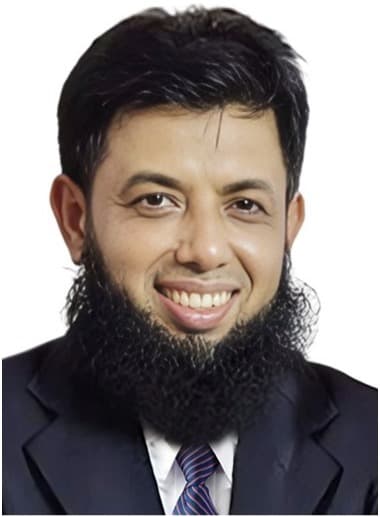
Nagamatsu Faruk永松ファルク
Education · Migration · Bangladesh–Japan
Nagamatsu Farukনাগামাতসু ফারুক永松ファルク

President, Bangladeshi Students' Support Association in Japan (BSSAJ) · Chairman, Rijik International Co., Ltd.

“Students are the greatest asset in Bangladesh–Japan relations. That is not my belief but the finding of my research — three years of immigration records and the arithmetic of remittance return the same answer.”

— Nagamatsu Faruk

He came to Japan on a Japanese government scholarship in 2000, has guided Bangladeshi students to Japan since 2002, and has been a Japanese citizen since 2009. Today he is the founding President of the Bangladeshi Students' Support Association in Japan (BSSAJ) and Chairman of Rijik International, Tokyo — a man who brings to the tables of two governments not appeals, but arithmetic.

Nagamatsu Faruk (永松ファルク)
永松ファルク
9,275
Bangladeshi students admitted to Japan, 2022–2024

Japan Ministry of Justice figures

55,000
Five-year student target, 2026–2030

Joint AJLIB–BSSAJ plan

26 April 2025
BSSAJ founded

Elected President on 30 April

Research and policy briefs

What was laid on the tables of embassies and ministries, as laid — every figure bound to its source, every recommendation addressed to someone by name.

Featured publicationPolicy analysis

Students are the largest source of remittance from Japan: the 2022–2024 data

By Japan Ministry of Justice figures, 9,275 Bangladeshi students were admitted to Japan in three years. Even a conservative model of a student's monthly income and costs yields savings of about BDT 1.8 million a year — many times what a TITP or SSW worker sends. Yet the student pathway has no place in the government's manpower planning.

Read more

At a glance

  • 9,275 students in three years — the largest remittance source missing from official planning.
  • About BDT 1.8 million saved per student per year — ten times a work-visa holder (model).
  • 25.6% refused a visa despite a COE; 1% in Nepal — the gap is the policy question.
Action plan

55,000 students in five years: the 2026–2030 roadmap

Japan has raised its international-student target from 300,000 to 400,000. With AJLIB and BSSAJ, the plan grows intake 10% a year from 2026 across four semesters to a total of 55,000 — backed by a network of JASSO-approved schools, quality improvement, and an international education fair with the Embassy.

55,000
students, 2026–2030
10%
annual growth
Policy proposal

An SSW pathway for students refused a COE: 8,200+ skilled workers in five years

Each semester 15–20% of applicants are refused a Certificate of Eligibility; after a second refusal most give up. The proposal: route N4 certificate-holders to the Specified Skilled Worker visa and encourage the rest to complete N4. At 25% annual growth that is 8,206 workers in 2026–2030.

15–20%
COE refusals per semester
8206
SSW workers, 2026–2030 (projection)
Policy proposal

Language-test capacity and equal recognition of certificates

The JLPT is held twice a year with 6,000–7,000 seats that sell out in two or three days — 20% of students cannot sit at all. JFT-Basic seats vanish within hours. Japan recognises ten tests, yet in Bangladesh a visa is in practice hard to obtain on any certificate other than the JLPT — while elsewhere any one recognised certificate suffices.

2×
JLPT sittings a year
6–7k
seats per sitting

All research and policy briefs

Agenda 2030

Seven commitments, each measurable. In 2030, this page will be the measure of him.

  1. 01

    55,000 Bangladeshi students to Japan in 2026–2030

    Yearly targets: 9,000 (2026) → 13,231 (2030)

  2. 02

    An SSW pathway for students refused a COE

    8,206 SSW workers in five years (25% annual growth)

  3. 03

    More language-test seats and equal recognition of all approved certificates

    Seat counts; post-COE approval 74% → 99%

  4. 04

    Policy dialogue on the 28-hour weekly work limit

    A formal meeting; a policy review initiated

  5. 05

    Legal remittance and a student–Embassy link

    Volume of students' legal remittance

  6. 06

    An international education fair and a JASSO-approved school network

    Participating schools; schools newly accepting from Bangladesh

See all seven goals

From the President's message

BSSAJ exists to equip students and workers from Bangladesh — before they arrive — with the language, cultural understanding, knowledge of rules and conduct they need to establish themselves successfully in Japan's modern, disciplined society. Alongside that, we support those already in Japan's labour market with whatever problems they face, and we encourage Japanese language schools, universities and companies to welcome more students and skilled workers from Bangladesh.

— Nagamatsu Faruk, President, BSSAJ

Read the full message

Recent activities

  1. EventUpcoming

    Nagoya seminar — BSSAJ's expansion into central Japan

    Role:
    Organiser
    Place:
    Nagoya

    Source: Public posts on his Facebook profile (permission to cite obtained from the user's compiled portfolio document, Aug 2026)

  2. EventUpcoming

    JLPT Achievers' Reception & Japan Guideline Seminar 2026

    Role:
    Organiser
    Place:
    International Mother Language Institute, Segunbagicha, Dhaka

    Source: bssaj.org

  3. Government

    Seminar: “Possibilities and Challenges for Japanese Language Schools in Accepting Students from Bangladesh” — organised by the Bangladesh Embassy; BSSAJ's fourth seminar

    Role:
    Representative Director, BSSAJ
    Place:
    Sendai City War Reconstruction Memorial Hall, Miyagi

    Audience: teachers and directors of Japanese language schools.

    Source: bssaj.org

  4. Event

    JPT Award Ceremony 2026; announcement of 150 extra seats for the August JPT sitting

    Role:
    Participant

    Source: Public posts on his Facebook profile (permission to cite obtained from the user's compiled portfolio document, Aug 2026)

All activities

Straight questions, straight answers

Who is Nagamatsu Faruk?
Nagamatsu Faruk (永松ファルク; legal name Mohammad Omar Faruk) is a Japanese citizen of Bangladeshi origin. He is the founding President of the Bangladeshi Students' Support Association in Japan (BSSAJ) and Chairman of Rijik International Co., Ltd., Tokyo. He came to Japan on a Japanese government scholarship in 2000, graduated from Ritsumeikan Asia Pacific University in 2004, has advised students since 2002, and has been a Japanese citizen since 2009.
What is BSSAJ?
The Bangladeshi Students' Support Association in Japan (BSSAJ) is an association of experienced Japan-based education consultants, formally founded on 26 April 2025. It prepares Bangladeshi students and workers in language, culture and rules before they come to Japan, supports them after arrival, and carries policy dialogue with the Bangladesh Embassy in Tokyo and Japanese ministries. Website: bssaj.org.
What does he work on?
Policy on sending students and skilled workers from Bangladesh to Japan: student visas and the COE, student remittance, an SSW pathway for those refused a COE, JLPT/JFT-Basic seat shortages, the 28-hour weekly work limit for students, and encouraging Japanese language schools to accept Bangladeshi students.
How many Bangladeshi students came to Japan in 2022–2024?
By Japan Ministry of Justice figures, 9,275: 2,760 in 2022, 3,155 in 2023 and 3,360 in 2024. In the same period 3,185 applicants (25.6%) were refused a visa despite holding a COE.
What is his plan to 2030?
With AJLIB and BSSAJ: 55,000 Bangladeshi students to Japan in 2026–2030 (10% annual growth); 8,200+ skilled workers via an SSW pathway for COE-refused N4 holders; more language-test seats; legal remittance; an international education fair with the Embassy; and a BSSAJ Tower and research centre in Bangladesh.
How can I contact him?
E-mail [email protected] (his office) or [email protected] (BSSAJ matters); telephone +81-3-6801-7687; address 2-25-15 Hirai, Edogawa-ku, Tokyo. Speaking, policy-consultation and media requests go through the Contact page.